
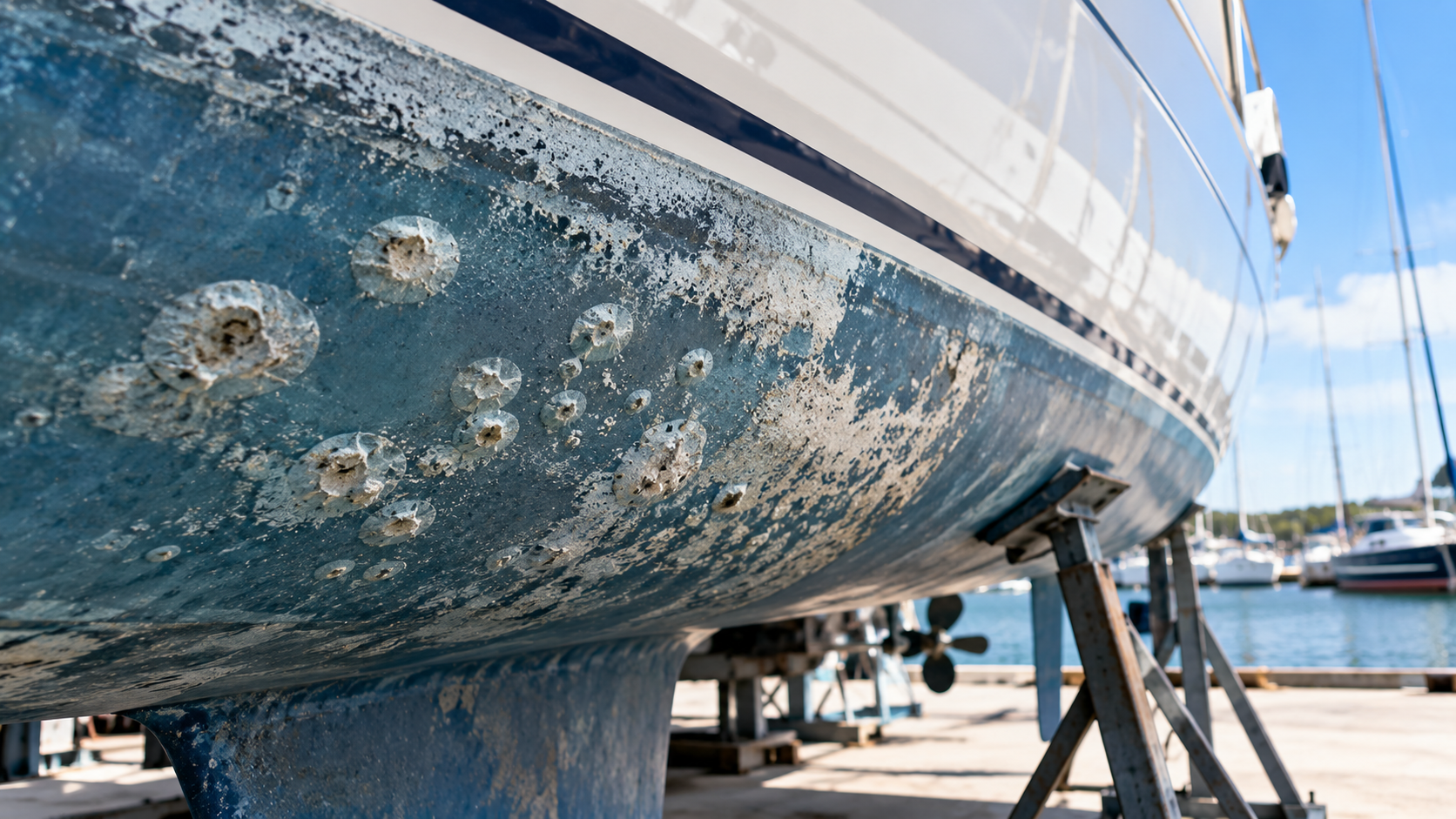
Osmosis is a word that many GRP yacht owners would rather not hear. However, understanding what it is and recognising the signs early can help you make informed decisions about your yacht’s maintenance.
Osmosis is associated with moisture entering the laminate of a GRP hull and can result in blistering and other changes to the laminate over time.
If you notice unusual blisters or changes to the underwater surface of your yacht, it is worth having the hull inspected.
What is yacht osmosis?
Osmosis is a process associated with moisture and chemical reactions within a GRP laminate.
It can occur when water penetrates the laminate and interacts with components within the structure.
The resulting process can cause pressure and changes within the laminate, potentially producing blisters on the hull.
Not every blister on a yacht automatically means the same thing, which is why professional assessment is important.
What does osmosis look like?
One of the signs commonly associated with osmosis is the appearance of small blisters on the underwater hull.
These may be isolated or more widespread.
Other possible signs include:
- Blisters beneath the underwater coating
- Affected areas of the laminate
- Moisture readings that indicate increased moisture
- An unusual smell when a blister is opened
- Changes to the hull coating
However, blistering can have several possible causes. A proper inspection is needed before deciding that a yacht has an osmosis problem.
Can yacht osmosis be repaired?
In many cases, yes.
The appropriate treatment depends on the extent and condition of the affected laminate.
A professional treatment may involve removing coatings, allowing the hull to dry where necessary, repairing affected areas and applying an appropriate protective coating system.
The exact process should be determined following inspection rather than assuming that every yacht requires the same treatment.
Why early assessment matters
If you discover possible osmosis, don’t panic.
The most useful first step is to establish what you’re actually dealing with.
An assessment can help determine:
- Whether the hull is showing signs associated with osmosis
- How widespread the issue appears to be
- Whether the laminate is affected
- What preparation may be required
- What repair or treatment options are appropriate
This gives the yacht owner a clearer picture of the work involved.
Does every yacht need osmosis treatment?
No.
Osmosis treatment is not something that should automatically be carried out simply because a yacht is a certain age.
The condition of the individual hull should be assessed first.
This is particularly important because unnecessary removal of coatings or extensive treatment can create additional work without addressing an actual problem.
Yacht osmosis treatment in the Solent
Yacht Care Plus can assess GRP yacht hulls and advise on appropriate repair and maintenance requirements in the Gosport and Solent area.
If you’ve noticed blisters, unusual marks or deterioration beneath the waterline, arranging an inspection can help establish what is happening before deciding on the next step.